On December 10th 1962, Ethel Haythornthwaite wrote of ‘the road and rail crisis’, concerned about the effects of proposed railway closures in what we now call the Peak District. She described the proposed closures as ‘one of the worst threats to scenic beauty’. It is thanks to Ethel that the Hope Valley railway line remains in operation today, so when we heard that the Council for the Protection of Rural England, Peak District and South Yorkshire (CPRE PDSY) would be working with young people in the local area to bring her inspirational story to life, we knew we had to get involved.
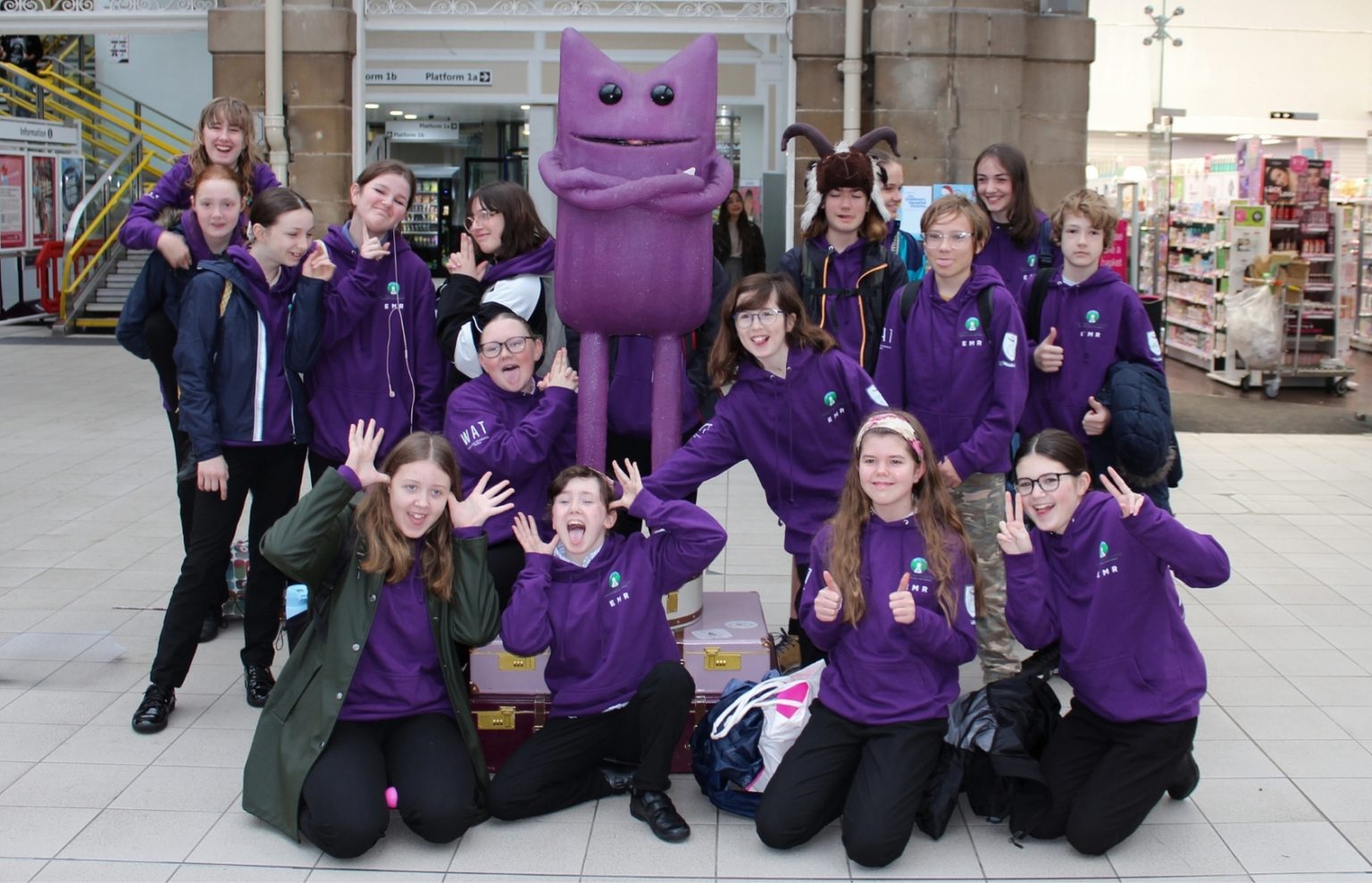
Ethel Haythornthwaite was an activist and environmentalist whose campaigning helped to lead to the creation of the Peak District National Park. Yet, even within her hometown of Sheffield, her story is almost unknown. Playwright Paul Whitfield, director Gertie Whitfield and the students of Newfield School wanted to change this, bringing the story of this countryside pioneer to life to celebrate her revolutionary work. The project kicked off with a series of workshops led by Whitworks Adventures in Theatre (WAT) where 240 Year 7 students examined letters, photos and maps to explore how Ethel’s work protected the land around Sheffield from inappropriate development. They concluded that “Ethel is an important and engaging powerful female voice from the past. Often, history is dominated by men. This is an opportunity to change that!”.

This month, an all-female cast took to the stage over three nights to perform The Exploits of Ethel, written by Paul Whitfield in collaboration with CPRE PDSY. Their debut performance in Edale on the 19th October felt particularly special for us as it saw cast, crew and audience members travel on the train via the Hope Valley line which Ethel fought so hard to protect. Northern Trains and the High Peak and Hope Valley Community Rail Partnership jointly funded the tickets, allowing free travel for the event. When the train stopped at Grindleford where it says “For Longshaw” on the station sign – the young people got really excited because the National Trust’s Longshaw estate has a new meaning for them after learning about Ethel’s work to save it. When asked at the talkback which was their favourite performance, one of them said; “Edale, because you could see the hills and countryside Ethel had worked to save.” It was performed to an audience ranging from 10 to 80 years old in a cosy setting and the Friends of Edale station volunteered setting up the stage and clearing up at the end. We have created a video to celebrate this special day, which you can watch here.
In the early 1960s there was only one train company in Britain, British Railways, which, under a Conservative government was deemed to be too inefficient and expensive. Scene 22 of The Exploits of Ethel details Ethel’s impassioned protection of the Peak District’s wild and varied landscapes, when a man called Dr Beeching was employed to revolutionise the system, proposing that 2,663 stations must be closed, resulting in the loss of 67,700 jobs and the closure of 5,000 miles of railway lines including the Peak District’s very own Hope Valley line. Luckily for us, Ethel had something to say on the matter! Ethel fought hard against Beeching and the proposed closure of the railway line as she feared it would encourage access by motor vehicles. Most of Dr Beeching’s ideas were put into action, and British Railways was massively reduced in size. But the Hope Valley line remained.

Alexa Stott from East Midlands Rail attended the performance and reflected afterwards, “What an amazing afternoon and performance from a very talented group…I was moved to tears by the story that was told and its importance and relevance to the world around us today and the risks our beautiful countryside still faces. I hope this week’s audiences enjoy the performances as much as I did on Saturday. It was a privilege to support this project and I hope we can find ways of helping it reach a wider audience in the coming months.”
This work has been made possible thanks to East Midlands Rail, Newfield School, High Peak Hope Valley Community Rail Partnership, Sheffield Church Burgesses Trust, the British Agricultural History Society, Northern Rail and CPRE PDSY.